Apple Pay in Indonesia: Too Complicated or Simply Unnecessary?
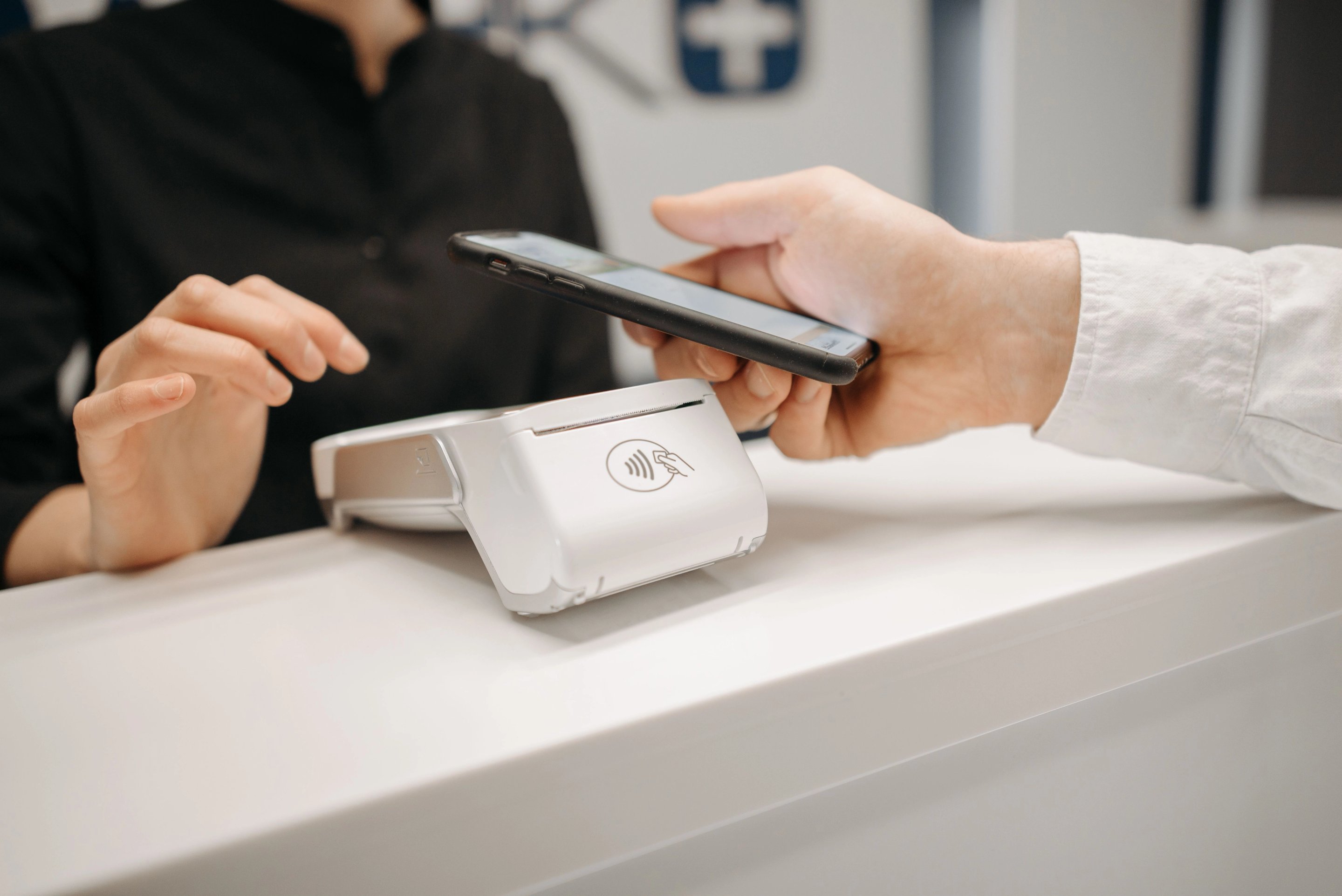

While Apple Pay expands in SEA, its absence in Indonesia isn't a sign of lagging behind. Comparing Apple Pay to QRIS pits a luxury feature against a national payment backbone. While neighboring markets adopt tap-to-pay, Indonesia's QR foundation continues to lead the way in true digital financial inclusion.
Key Insights
- Infrastructure Over Luxury:Most SEA nations built national QR networks first before welcoming Apple Pay; Apple Pay sits on top of payment foundations rather than replacing them.
- Designed for Inclusivity:QRIS thrives because it requires no expensive Point-of-Sale (POS) terminals, allowing micro-merchants and street vendors to accept digital payments seamlessly.
- The Next Era of Payments:Innovations like QRIS Tap, cross-border QR payments, and BI-FAST prove Indonesia’s payment story is accelerating on its own terms.
On the fourth of August 2026, Apple Pay went live in the Philippines. Chinabank, GoTyme, Metrobank and UnionBank all came onboard at launch. Filipinos were excited about it and well.. rightly so. The launch was pretty tidy. The reaction was good, people are starting to try it on their phones. Some TikTok and Reddit accounts also brought it up on the platform to let other people know whether it worked well or not on their devices.
Looking at the new phenomenon, we could not help but to think something like: oh well, I guess we are never getting our turn any time soon.
Singapore, Malaysia and Vietnam had adopted Apple Pay by 2023 while the Philippines just crossed that bridge. Thailand is apparently next in the queue. And Indonesia? We are still scanning QR codes at Kopi Kenangan while struggling to get a proper signal sometimes.
But hey, let’s really think whether we are really that behind because we might see different angles here.
How Southeast Asia's Payment Systems Evolved
Across Southeast Asia, national QR payment systems like Thailand's PromptPay, Indonesia's QRIS, Malaysia's DuitNow QR, Vietnam's VietQR, and the Philippines' QR Ph were established well before Apple Pay arrived in those markets. Singapore stands as the sole exception in the region, having welcomed Apple Pay in 2016 prior to launching PayNow in 2017.
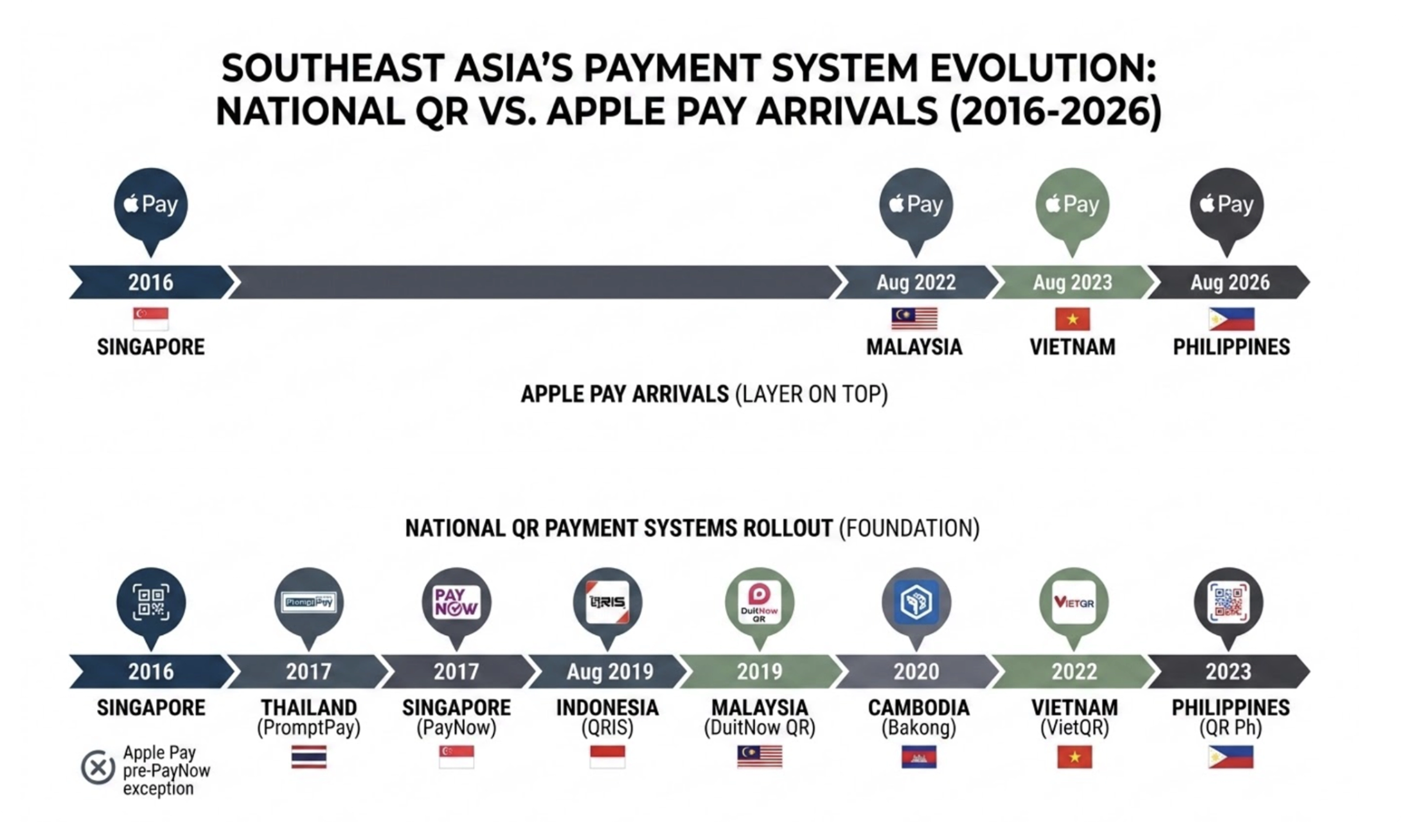
The pattern is pretty clear. Most of Southeast Asia built QR first, spent years building it, spread it across the country and only much later welcomed Apple Pay to sit on top. Apple Pay is not the pioneer here. It is the newer arrival.
So when we ask “When is it our turn?”, we are asking the question backwards. The right question is supposed to be: what would Apple Pay actually add on top of what we already have in Indonesia?
QRIS: The System That Built Inclusive Economy
QRIS in Indonesia now covers millions of merchants and users. Thailand's PromptPay has received similar enthusiasm and nuance like Indonesia too. Those numbers are not just big, they are shaped in a specific way.
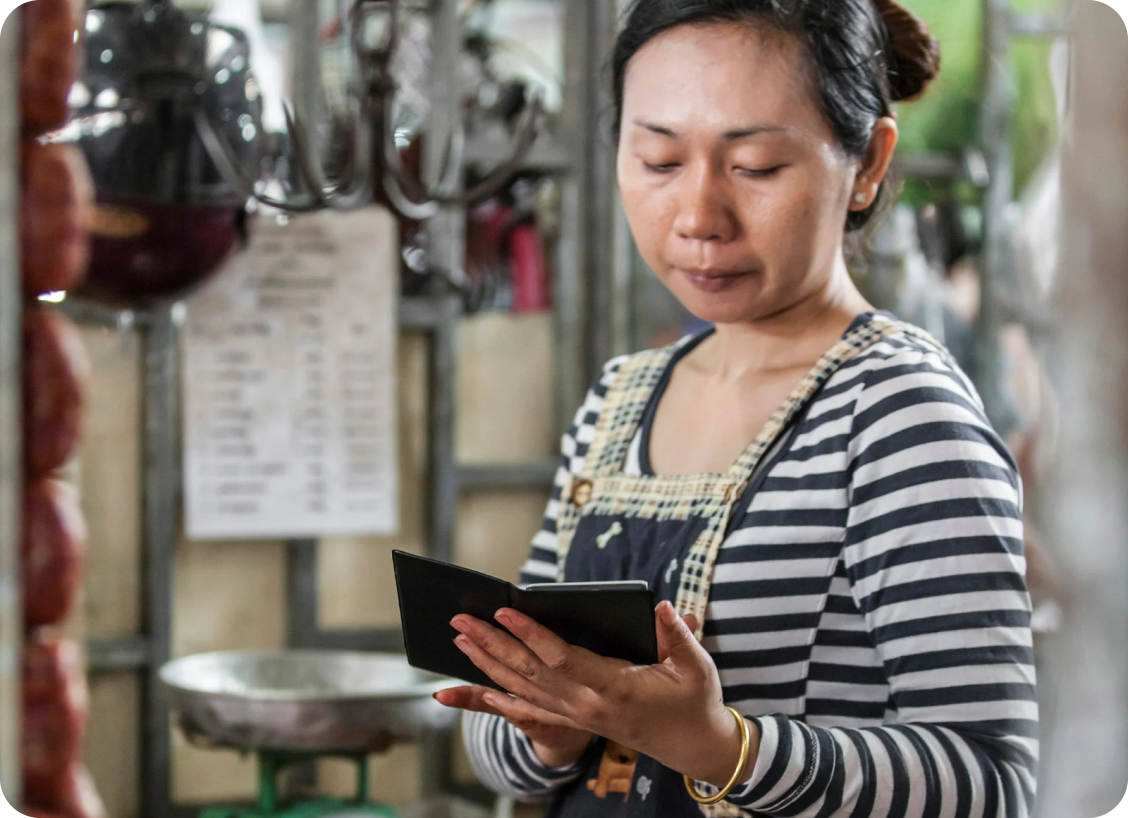
The majority of QRIS merchants are street food stalls, smaller merchants and other types of micro-MSMEs. Most of them will never install an NFC-enabled point-of-sale terminal in their life. They might not be able to afford one anytime soon and their monthly transaction volume does not justify one. However, almost every single one of them can accept a digital payment today, from any wallet, on any bank, just by printing a QRIS sticker and putting it on the wall next to the price of their worn out menu paper.
That is exactly what QR is about. QR does not dictate what kind of phone the customer should have, whether it's a cheap Android with an old camera or the newest iPhone model, as long as its camera works just fine. Bank Indonesia caps the merchant discount rate very low, at around 0.3% for micro-merchants, which is much less than card interchange typically costs. There is no hardware to buy, no monthly rental to pay, no minimum transaction volume required in most cases.
Basically, QR was built for the actual realities of Southeast Asia. A region with a huge informal economy, where iPhones are increasingly mainstream but still far from universal, and where a payment system that only reaches people with $800 phones would only reach a fraction of the population.
Just Like Asian Moms, We Keep Comparing Each Other
When we see our Singaporean or Malaysian friends tapping their phones to pay for their meal, what are we actually jealous of?
Jealousy is humane. It is one of the oldest emotional reactions we have and it can be useful in a positive way where it can push us to keep improving what we build. On the other hand, it also has a tendency to point at the wrong things. We look at the shiny surface of what other people have and we forget to look at what is underneath our own feet.
The comparison we keep making is a layer against a foundation. Apple Pay against QRIS. A convenience feature for the top slice of the market against a payment infrastructure that reaches the whole country. They are not the same size of thing.
That does not mean Apple Pay is bad or that we should feel superior for not having it yet. It just means our jealousy might be pointed at the wrong object. The neighbor who taps their phone is not living in a better payment future. They are just enjoying a small convenience on top of a similar foundation to ours.
And once you see that, the feeling of being left behind will slowly fade. We can just be happy for their new achievements for their society and we can quietly work on something way more meaningful for ours.
Remember, Apple Pay is Not The Mountain.
The good news is that Indonesia's payment story is not slowing down while everyone else adds an Apple Pay layer. It is somehow speeding up while most people are not paying attention to it most of the time.
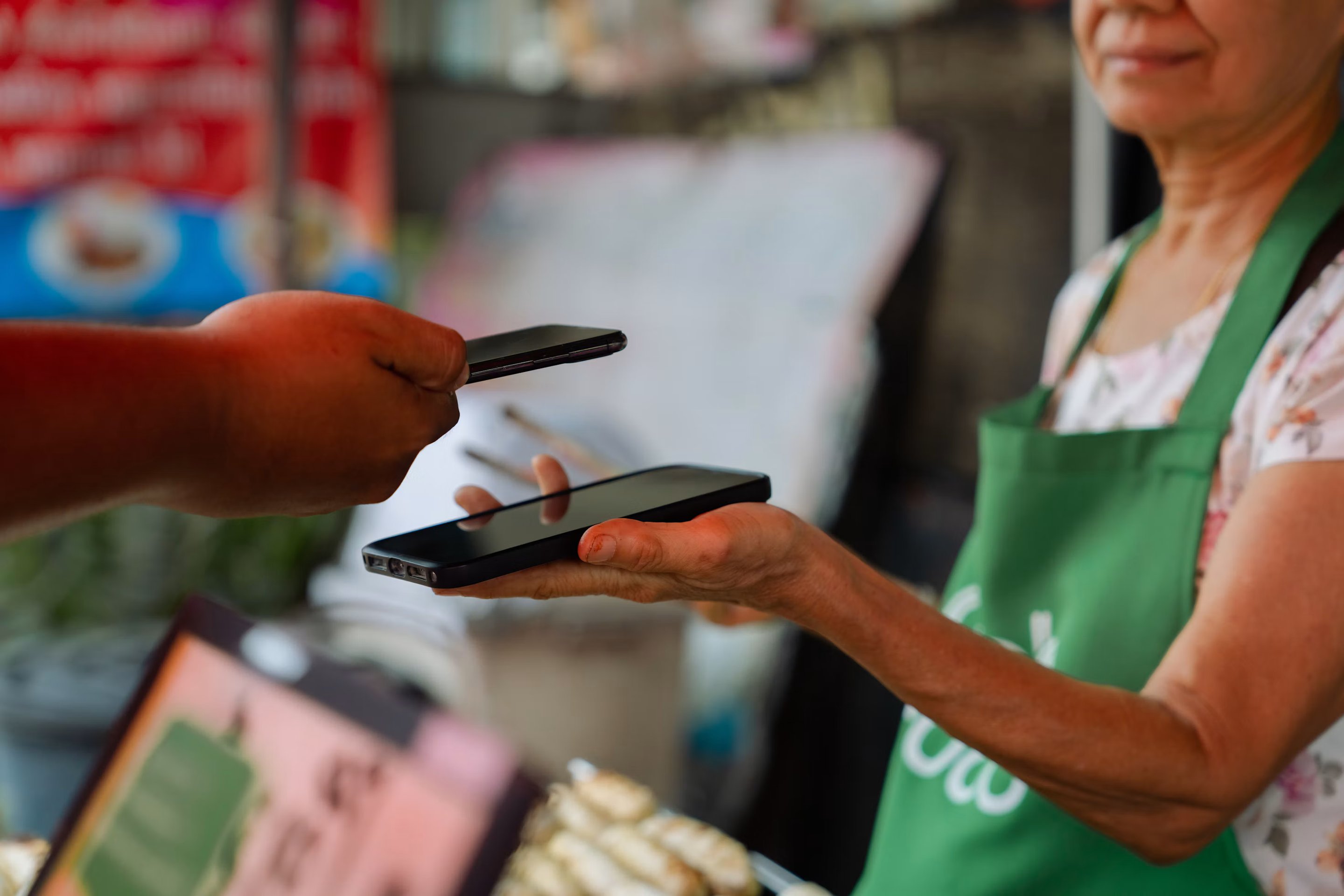
QRIS Tap is bringing NFC tap-to-pay into the QRIS standard itself, so we will eventually be able to tap our phones at a smaller stall when the EDC machines are getting more familiarized. QRIS Cross-Border is expanding into more countries, meaning Indonesian travelers will be able to scan QR through the region using their own bank apps. BI-FAST is processing real-time transfers at near-zero cost. Kartu Kredit Indonesia (KKI) is being built as a domestic answer to Visa and Mastercard. Also behind all of this, there are payment and banking teams across the country designing products for a market that other regions cannot easily replicate.
All of it without the presence of Apple Pay.
The next generation of Indonesian consumers and Indonesian product teams will not be measured by whether we finally have Apple Pay. They will be measured by what we build on top of the QR foundation we already have, and how we make it work better for the people we actually serve.
Apple Pay is not a standard we lack. It is one specific product, made by one specific company, for one specific segment of users. It happens to be very good at what it does, yet it is not the mountain we should be trying to climb nor the ruler by which we should measure ourselves.
The mountain is bigger than that and we have been climbing it for years now, bit by bit, one QRIS sticker at a time.