Mandiri Utama Finance
Building Enduring Trust in MUF’s Digital Product Transformation
Mandiri Utama Finance (MUF), a financing company (subsidiary of Bank Mandiri), provides financial solutions for vehicle ownership, from new and used car financing to multipurpose loans. As digital adoption accelerates, MUF is evolving its mobile platform to not only streamline transactions but also create a more relevant, engaging, and user-driven experience. This transformation is driven by shifting user expectations, rapid behavior changes, and the need to support customers throughout their daily lives.
Building trust as MUF evolves from a financing service into a digital-first platform for every stage of vehicle ownership and beyond
By leveraging user insights, Mandiri Utama Finance aims to reimagine its mobile app beyond core financing, transforming it into a connected platform for buying, selling, and financing vehicles. This digital evolution seeks to unlock new growth opportunities by offering services that span the entire vehicle lifecycle.
Sixty Two collaborated with Mandiri Utama Finance to focus on understanding user needs, testing feature resonance through concepts, and aligning stakeholder vision to define what the MUF app could potentially become
What we did
Category

Clearing the Windshield: Revealing the Strategy Behind High-Stakes User Journey
To achieve this vision, we aligned internal priorities, uncovered user needs, and evaluated early concepts that could improve clarity, confidence, and product relevance. This process unfolded through structured activities, from stakeholder interviews to usability testing, building a shared understanding of the journey and how to deliver value through both experience and execution
Our Strategy
Audit and Stakeholder Alignment
Conducted download sessions, interviews, and desk research to map MUF’s business priorities, surface misalignments, and establish a shared understanding of success.
User Research and Experience Mapping
Ran FGDs to uncover user expectations and behavioral patterns, shaping the feature structure, content hierarchy, and overall flow.
Design Definition and Validation
Collaborated with MUF to refine the design and shape the visual direction, merging Bank Mandiri’s trusted brand with MUF’s bold identity. Validated through usability testing to ensure the experience felt intuitive, credible, and in line with business goals
Bridging Perspectives: From Stakeholder Insights to Real User Needs
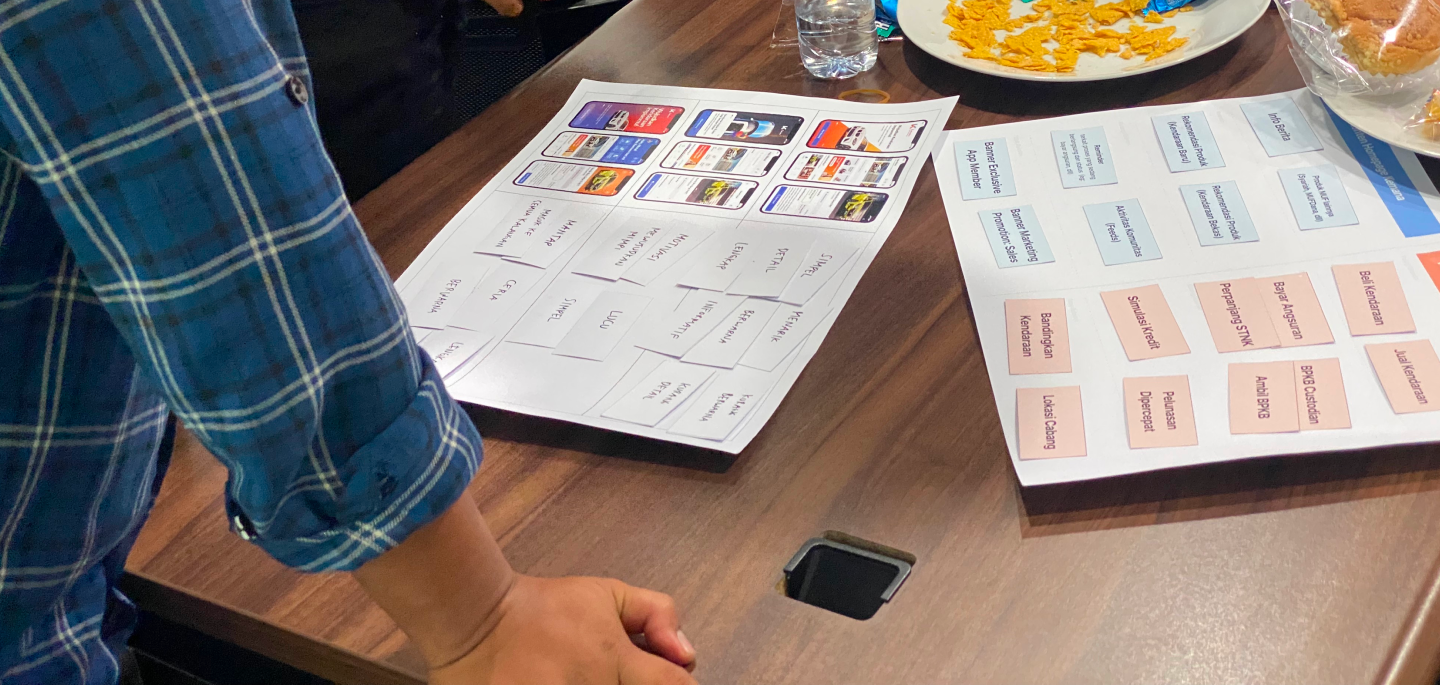
To lay a solid foundation for the project, we started from engaging key stakeholders. Insights into their goals and aspirations helped us shape the participant criteria and discussion guide we used for our Focus Group Discussions (FGDs).
Our FGDs served as a critical moment to connect internal aspirations with real user perceptions. Participants share their thoughts to early product concepts and visual direction, and these sessions helped us uncover what customers truly need to feel confident using the app.
We continued refining our hypotheses even until usability testing to validate our design decisions and evolve the product to best reflect shared needs of both the stakeholders and users.
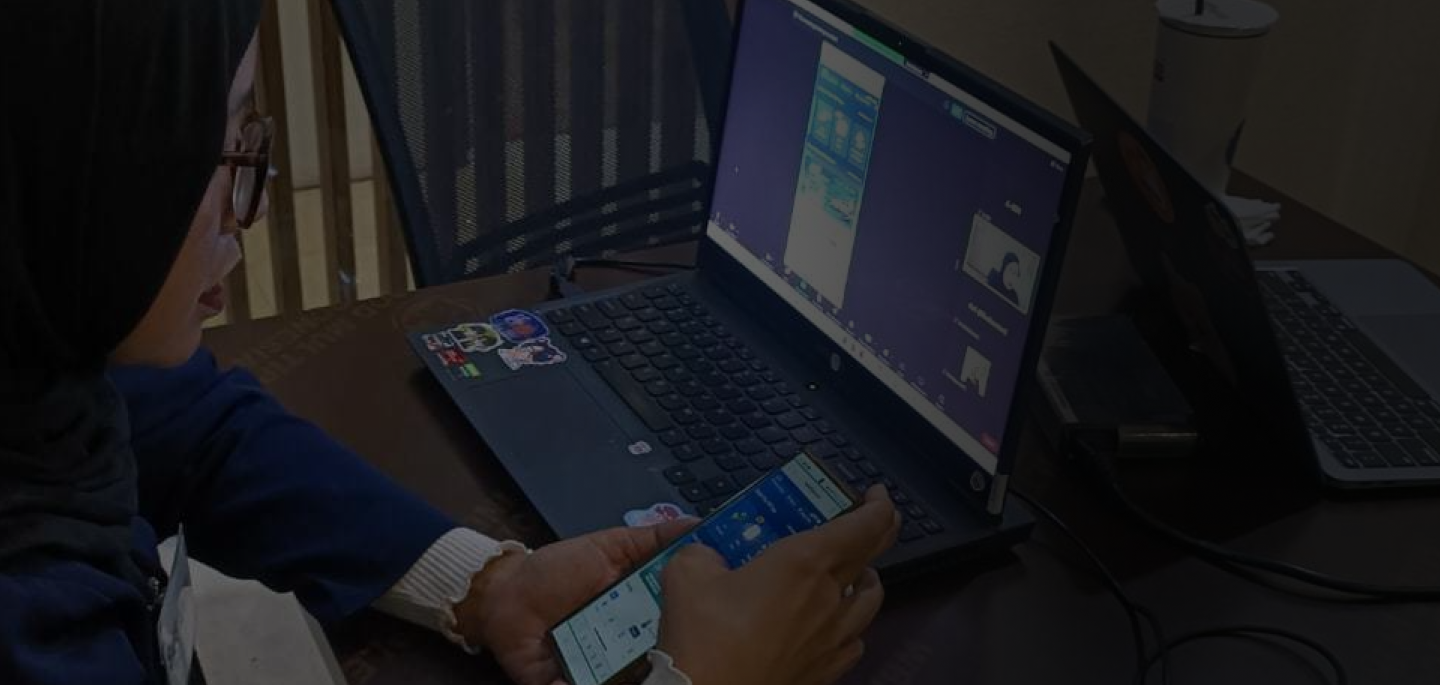
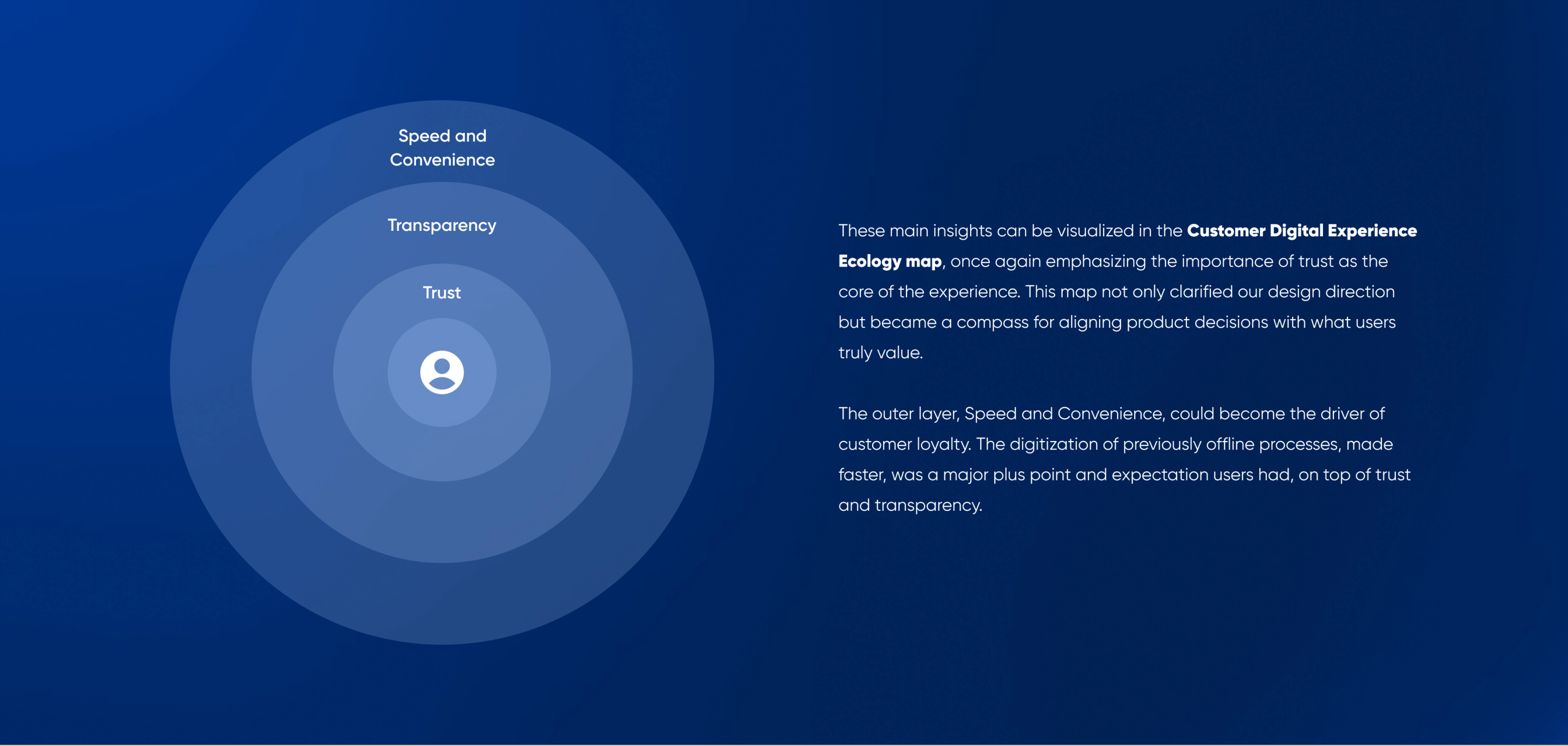
Through our research efforts, we gained insights to understand the foundational elements that build customer confidence and drive adoption for MUF’s digital offerings.
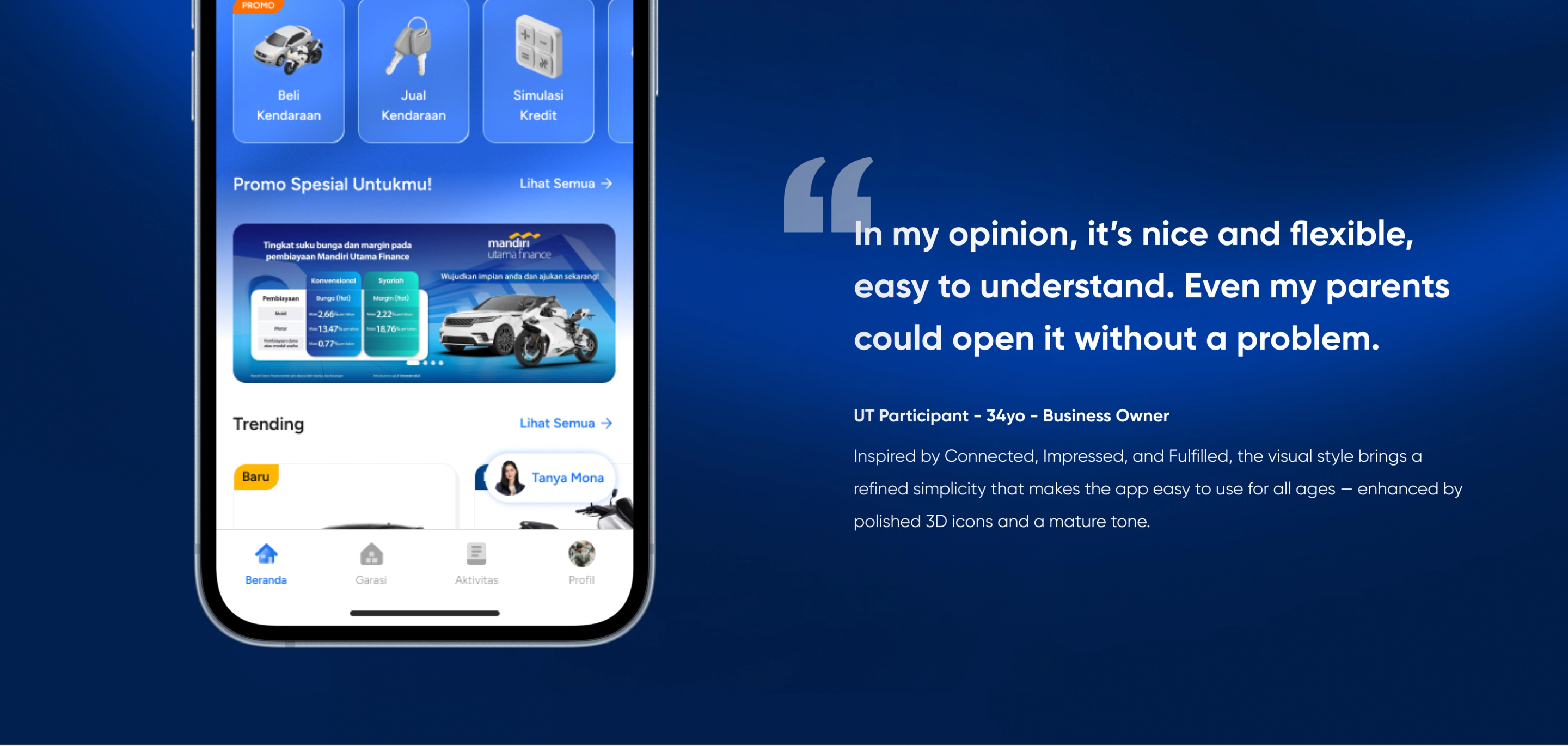
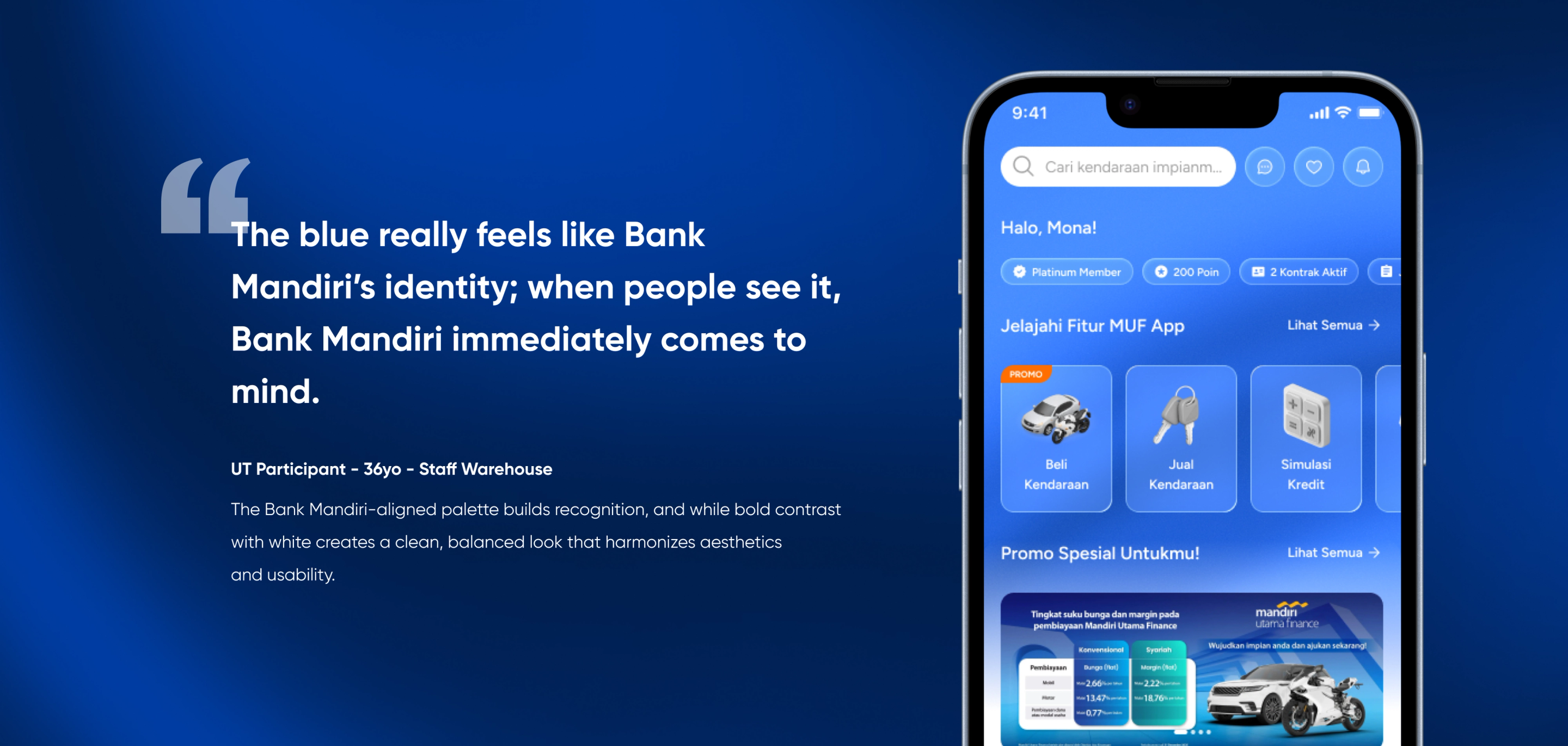
Brand Trust is the Foundation. Customers' confidence in MUF is fundamentally tied to its association with the larger Bank Mandiri brand. This existing trust lowers the barrier for users to adopt new digital features and services. We also found that this trust extends to the visual identity; users expect an app that feels bold and distinct yet clearly rooted in the familiar Bank Mandiri brand.
Transparency and Clarity Eliminate Skepticism. Once initial trust is established, users require profound transparency to move past any lingering skepticism. This means clearly communicating the value, risks, and benefits of features. Especially for processes such as handling sensitive documents, clear safeguards and open communication are essential to ensure peace of mind.
How Might We leverage Bank Mandiri's established trust to create a more seamless and confident experience in MUF: visually, emotionally, and functionally?
Driving Trust Forward, Streamlining the Experience to Match Expectations
When a product aligns with user expectations, it feels intuitive—and more importantly, trustworthy. Consistency builds confidence, and a streamlined experience signals that we understand user needs, creating the clarity and reliability that trust depends on.
Fueling Confidence with a Fresh Look
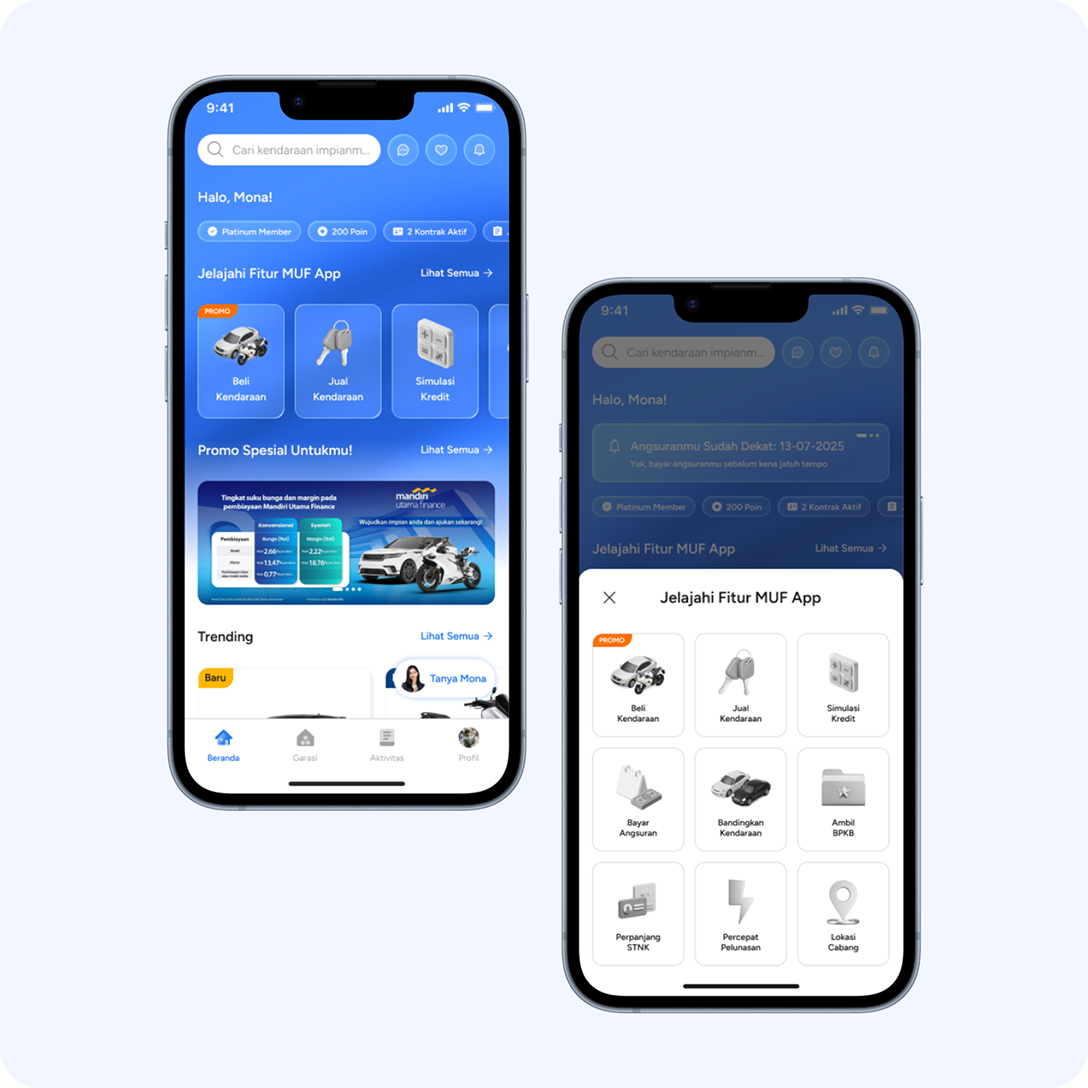
Rebranding MUF’s visual identity is a strategic move to strengthen trust with our audience. By embracing Bank Mandiri’s brand as a foundation, we leverage its equity to build recognition and familiarity, while introducing a bolder, more distinct design language that reflects MUF’s unique character and ambition.
The result is a clear, consistent, and contemporary identity that signals credibility and reinforces our commitment to evolve with our users.
Breaking Silos, Unifying the Experience
FGDs and card sorting revealed that users prioritize customer-centric features, yet the app’s separation between Public and Customer domains made them hard to access —effectively hiding them on first entry.
Building on these insights, we removed the siloed structure and unified both into a seamless journey, surfacing high-value content upfront and creating a more intuitive, discoverable experience for all users, from first-time visitors to loyal customers.
Automotive Ownership: From Search to Apply with Confidence, Shaping Trust Ahead
Owning a vehicle is more than just a purchase—it’s a commitment shaped by careful consideration and financial confidence. For many, the path from exploring options to applying for financing can feel overwhelming, filled with uncertainty and hesitation. Every step in this journey needs to reassure, guide, and build trust.
Information Architecture That Turns Exploration Into Informed Action
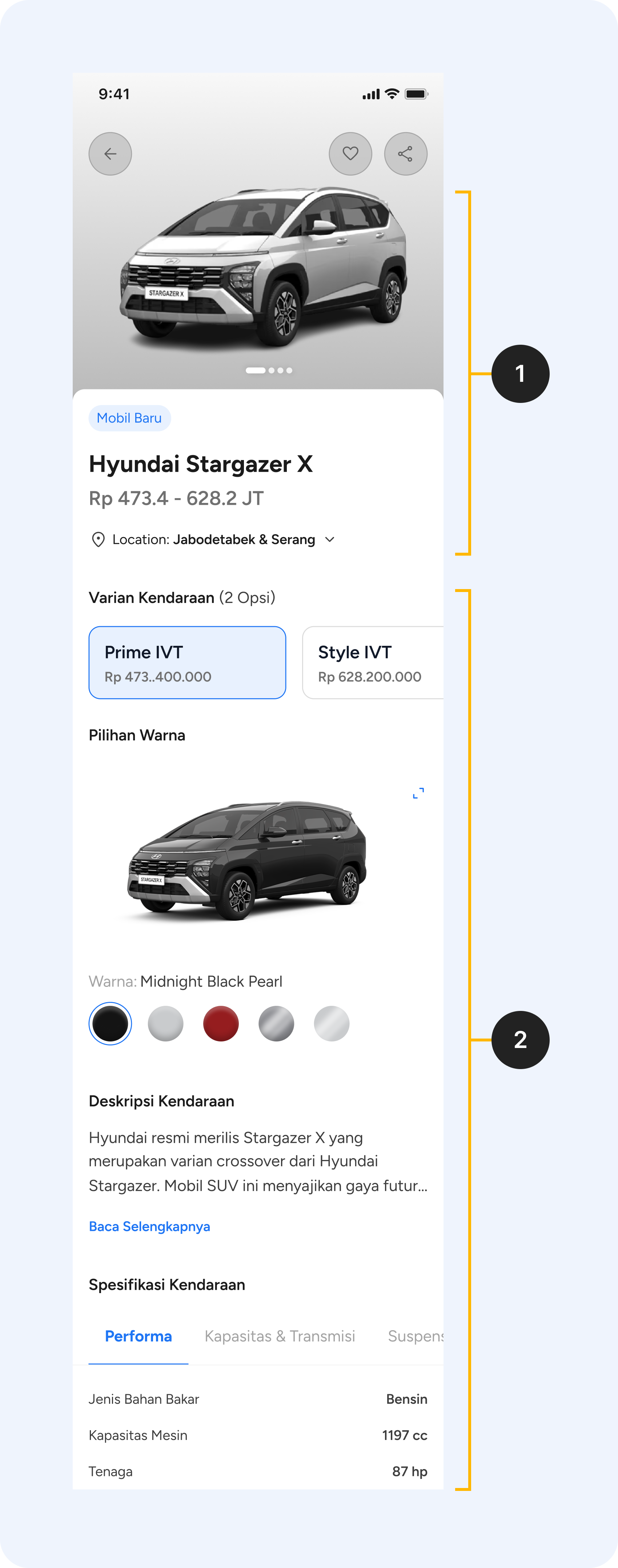
Users reach the product detail page while comparing options and deciding which vehicle suits them. Before they look at features and variants, they need to confirm they’ve found the right vehicle. We built the page around contextual clarity and progressive disclosure, ordering information the way people tend to evaluate a product. Essential details come first, and more specific information appears as users go further. That keeps the cognitive load down and helps users decide with confidence.
- Contextual Anchor: The model, price range, and location carry over from search results, so users know they’re on the right page and have a clear place to start.
- Dynamic Product Details: TChoosing a variant updates the colors, images, description, and specifications that go with it. Users can tell what will change when they switch, and they only see information for the variant they’re looking at.
Seamless financing turns clarity into confidence, and confidence into trust.
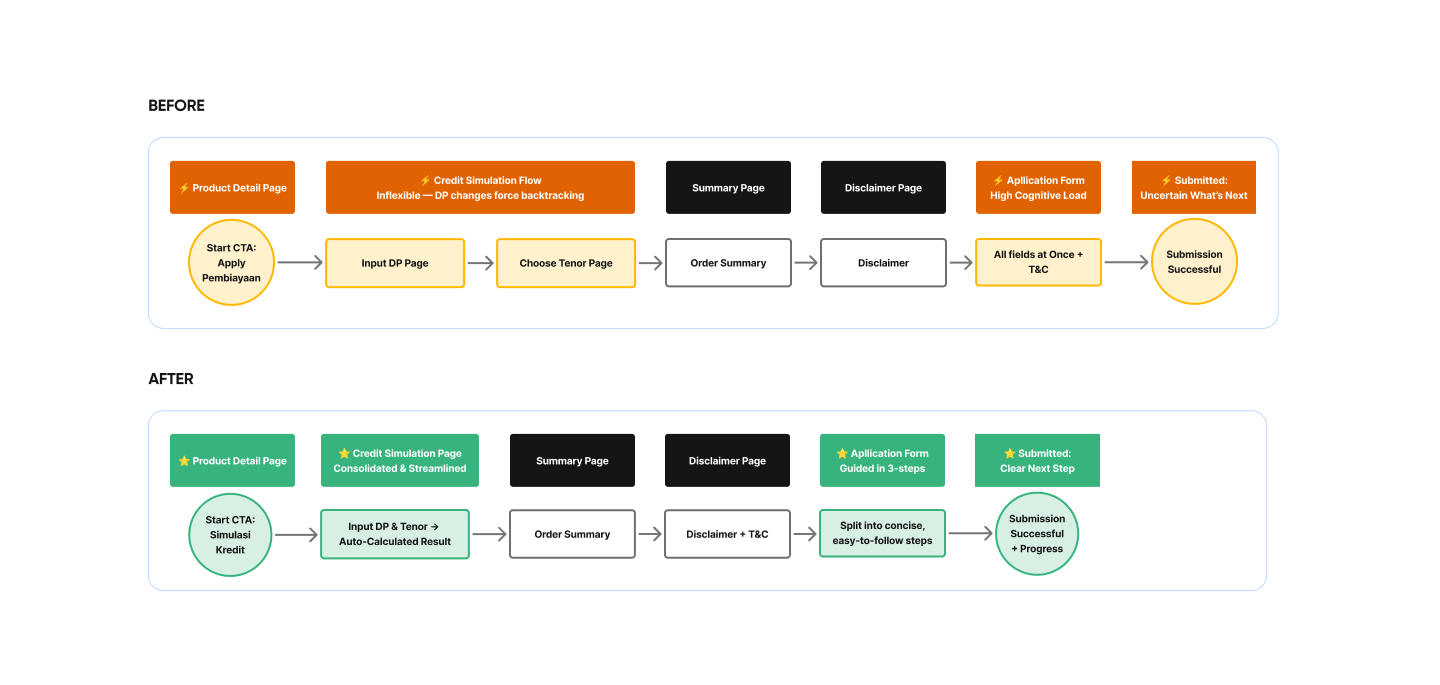
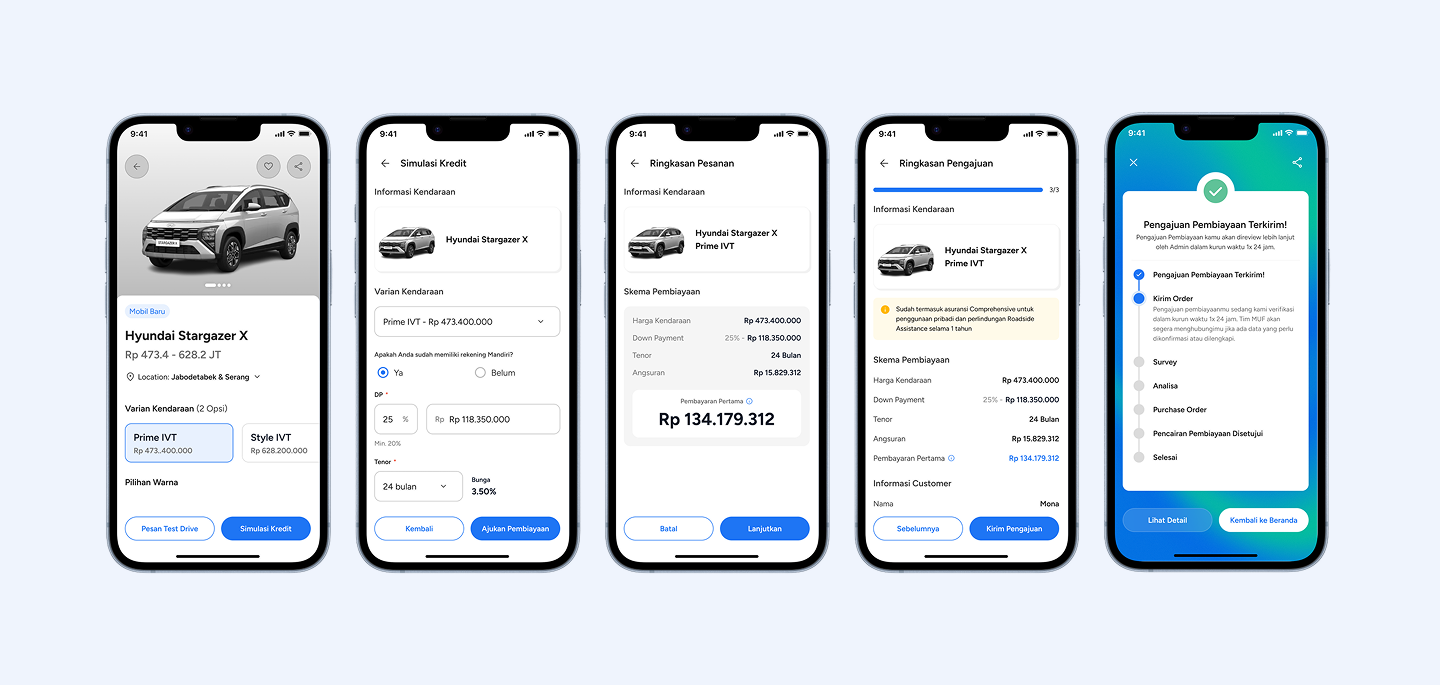
In MUF’s previous financing journey, users were directed to “Apply Financing” immediately after selecting a vehicle, even though their primary goal was to understand affordability. This premature call-to-action created hesitation by pushing users toward commitment before providing clarity.
We redesigned the journey around clarity before commitment, introducing credit simulation as the natural next step. Users can explore financing options, assess affordability, and build confidence before applying. Clear call-to-actions guide them through each stage, while progress indicators provide reassurance after submission. The result is a more intuitive, transparent journey that reduces friction and builds trust.
Sixty Two brought exceptional structure and creativity to the MUFapp revamp. Their end-to-end execution from initial research to the final design system delivered excellent results and made working with them a true pleasure. We gladly recommend their services