



Produce tech talent through the formal education system
Policies Involved
Challenge
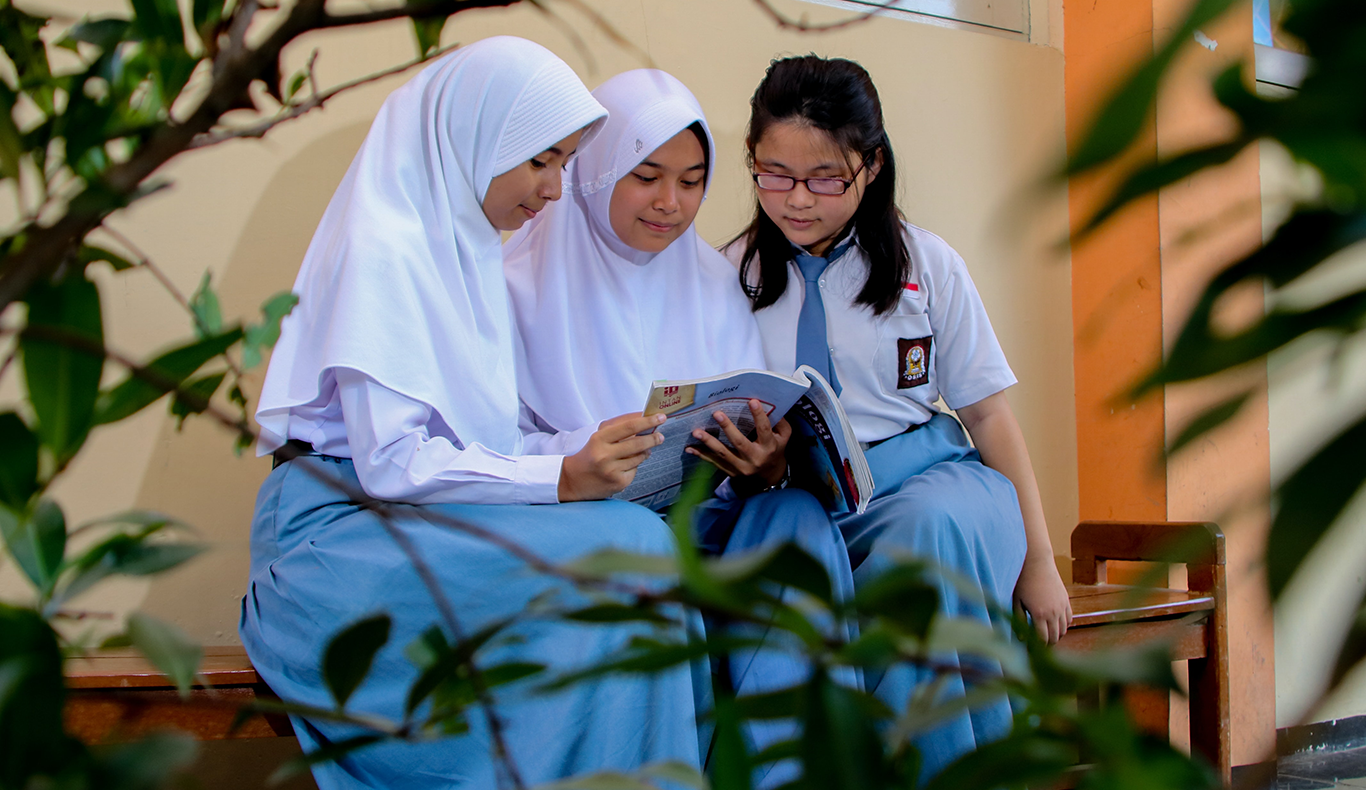
To ensure that future demands for high-quality tech talent are met, it is imperative that today’s formal education integrates the latest digital tools and technology skills into the curriculum. Given the increasingly high costs of continuing higher education, skills-based study such as those found in vocational secondary schools (Sekolah Menengah Kejuruan or SMKs) offers a new pool of candidates for technical careers in the technology sector. However, SMKs in Indonesia have long faced challenges in producing employable youths1. Furthermore, not all of Indonesia’s SMKs offer majors related to the digital economy, such as software engineering, machine learning or human computer interaction.
Current Policy
SMK education in Indonesia is regulated by the Ministry of
Education and Culture under the Directorate of Vocational
Education. In recent years, following the implementation of the
Presidential Instruction No. 9 of 2016 on the Revitalization of
SMKs, the Indonesian government has launched several programs to
improve SMKs and strengthen the graduates’ readiness to enter the
workforce. Building on the past programs, the latest 2022 Center
of Excellence (Pusat Keunggulan) program based on Minister of
Education and Culture Decree No. 17 of 2021 seeks to establish
collaborations between SMKs and the private sector, which involve:
joint curriculum development, project/industry-based learning,
lecturers from the business world and industry, practical
fieldwork, competency certification for graduates, teacher
training by industry, commitment by industry to absorb SMK
graduates, scholarships or commitment to work by the working world
for SMK students. Despite the encouraging development,
participation in the program is by application, as it is meant to
showcase selected SMKs as a reference center for improving the
quality and performance of other vocational schools. This creates
an opportunity gap whereby not all students enrolled in SMKs are
able to benefit from industry linkages.
Furthermore,
fluency in English is a crucial skill for students seeking to
pursue a career in the technology sector, but this is currently
not supported by the curriculum. For instance, according to the
Directorate General of Primary and Secondary Education of the
Minister of Education and Culture Regulation No. 7 of 2018 on the
SMK Curriculum Structure, the curriculum structure for software
engineering, a key major in digital economy, includes only 352
hours for English language and other foreign languages over the
course of three years2. Since English is the main language of the technology sector,
more focus and time should be devoted to its practical application
at the SMK level so that students can be more prepared before
entering the workforce.
Action
Efforts to produce digital talent through the formal education system require the close collaboration of educators, industry, as well as governments at the national and regional levels, both of whom play a role in the development and delivery of vocational education and training3. The expansion of digital economy majors to other SMKs across the country and involving industry in developing the curriculums can help learners to gain skills that are important to technology sector employers. Equalizing access to SMKs that benefit from the Center of Excellence program, or offering SMKs with digital economy majors access to the same facilities, is important since it gives students access to the quality teaching and equipment standards they need in order to succeed in the technology sector. Meanwhile, students’ English skills must also not be overlooked as it is a vital skill needed to be able to keep up with educational or training resources - many of which are provided only in the English language. Having practitioners as teachers can ensure that students are receiving the most relevant language skills that are required in the workplace. Lastly, incentivizing the technology sector to hire SMK graduates through fiscal and non-fiscal incentives can boost the rate of employment among SMK graduates, whose high unemployment rates remain a concern to policymakers.
Indicator of Success


- Employers find Indonesia’s vocational school grads of little use. https://asia.nikkei.com/Economy/Employers-find-Indonesia-s-vocational-school-grads-of-little-use2
- Directorate General of Primary and Secondary Education of the Ministry of Education and Culture Regulation No. 7 of 2018 on the SMK Curriculum Structure, Kompetensi Keahlian: Rekayasa Perangkat Lunak (3 Tahun).
- OECD. (2020). Employment and Skills Strategies in Indonesia. https://www.oecd-ilibrary.org/employment/employment-and-skills-strategies-in-indonesia_dc9f0c7c-en